Why Traditional Access Controls Fail in LLM Deployments

Sterling Davis
Head of Product Marketing
Head of Product Marketing
TL;DR: Prompt-driven apps quickly outgrow static API keys and coarse Identity Access Management (IAM) roles. OWASP’s LLM risk list shows why that model breaks. The answer is continuous, identity-aware policy applied before prompts ever reach the model. Pomerium provides that control so teams can ship GenAI features with confidence.
GenAI apps have introduced a new kind of access challenge.
Today’s LLM use cases—whether copilots, retrieval-based chatbots, or autonomous agents—regularly touch sensitive internal data. Yet many teams still lean on patterns built for REST APIs: one bearer token, full access.
That token often unlocks everything. The model endpoint, the vector store, and downstream tools the agent can call.
It only takes one misused prompt to reach into data that shouldn’t be exposed. In a recent example, Supabase’s MCP demo leaked private GitHub repos after a crafted prompt tricked the agent into executing an unexpected database command. The issue wasn’t with the model logic. There was simply no identity-aware policy in place between the prompt and the backend system.
OWASP recently published its Top 10 Risks for LLM Applications. Two risks are especially relevant to access control:
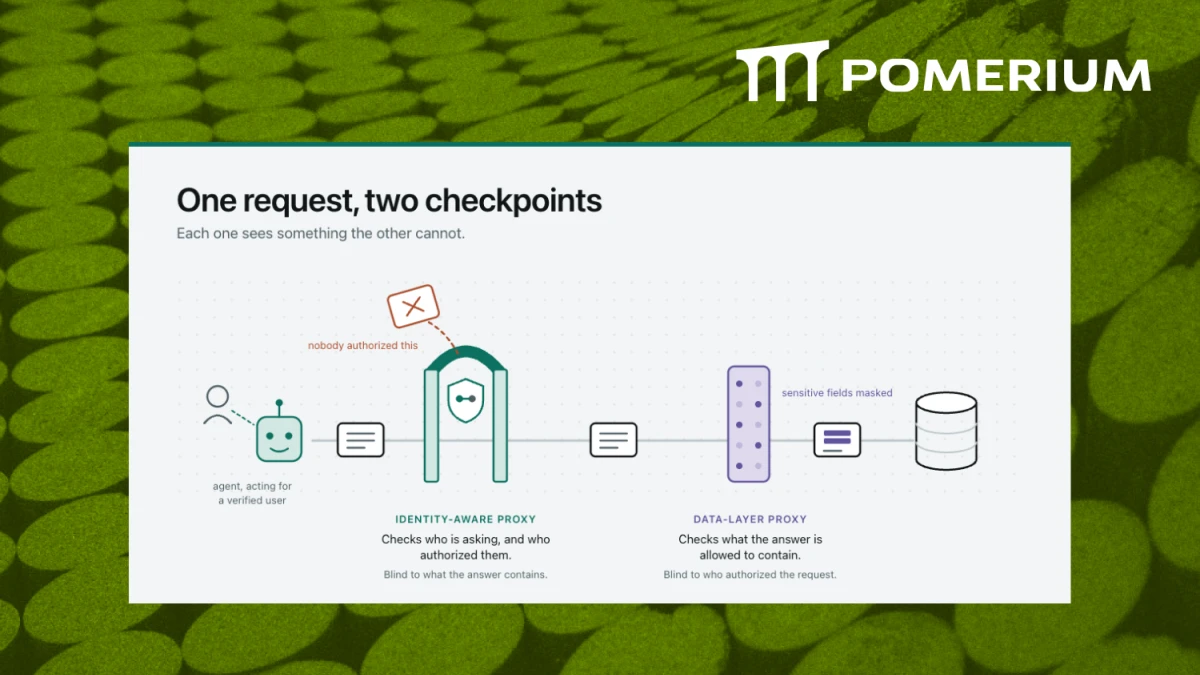
At the core, both problems stem from the same issue. Once a prompt passes through a shallow gateway, there’s no way to confirm who made the request or whether that action should be allowed. Prompt filters try to catch malicious content, but they operate without the context that authorization decisions require.
LLM traffic is stateful. A single user session can trigger dozens of calls across tools, APIs, and databases. These interactions carry different risk levels and should follow different policies.
Here’s what’s needed to keep access in check:
When identity and policy enforcement happen on every request, prompts cannot bypass access controls. Without that layer, access becomes implicit, not intentional.
Pomerium acts as an access proxy in front of your LLM infrastructure. Every call carries signed identity metadata, and policies are evaluated before the prompt or tool receives the request.
What this looks like in practice:
The outcome is Zero Trust for prompts. Access is never assumed. It’s granted only by rule.
A healthcare company built a chatbot to help staff resolve patient support tickets. It used retrieval-augmented generation (RAG) to query a care-specific vector store.
During internal testing, some users were able to retrieve content outside their access scope by rewording their prompts.
No changes were needed to the model, the issue was closed in a single afternoon.
Prompt filters can help flag questionable output. But they only work after the model has already seen and processed the prompt.
To prevent such exposure in the first place:
Security becomes proactive, not reactive.