categories
AI Gateway
Browse Pomerium articles in the AI Gateway category.
Topic archive
Resources Categorized: AI Gateway
Your IAM Was Built for People. Your Biggest Identity Problem Isn't People Anymore.
Every enterprise identity program was designed around a simple assumption: the thing logging in is a person. A person with a password, an MFA device, a predictable workday, and a manager who approves their access.
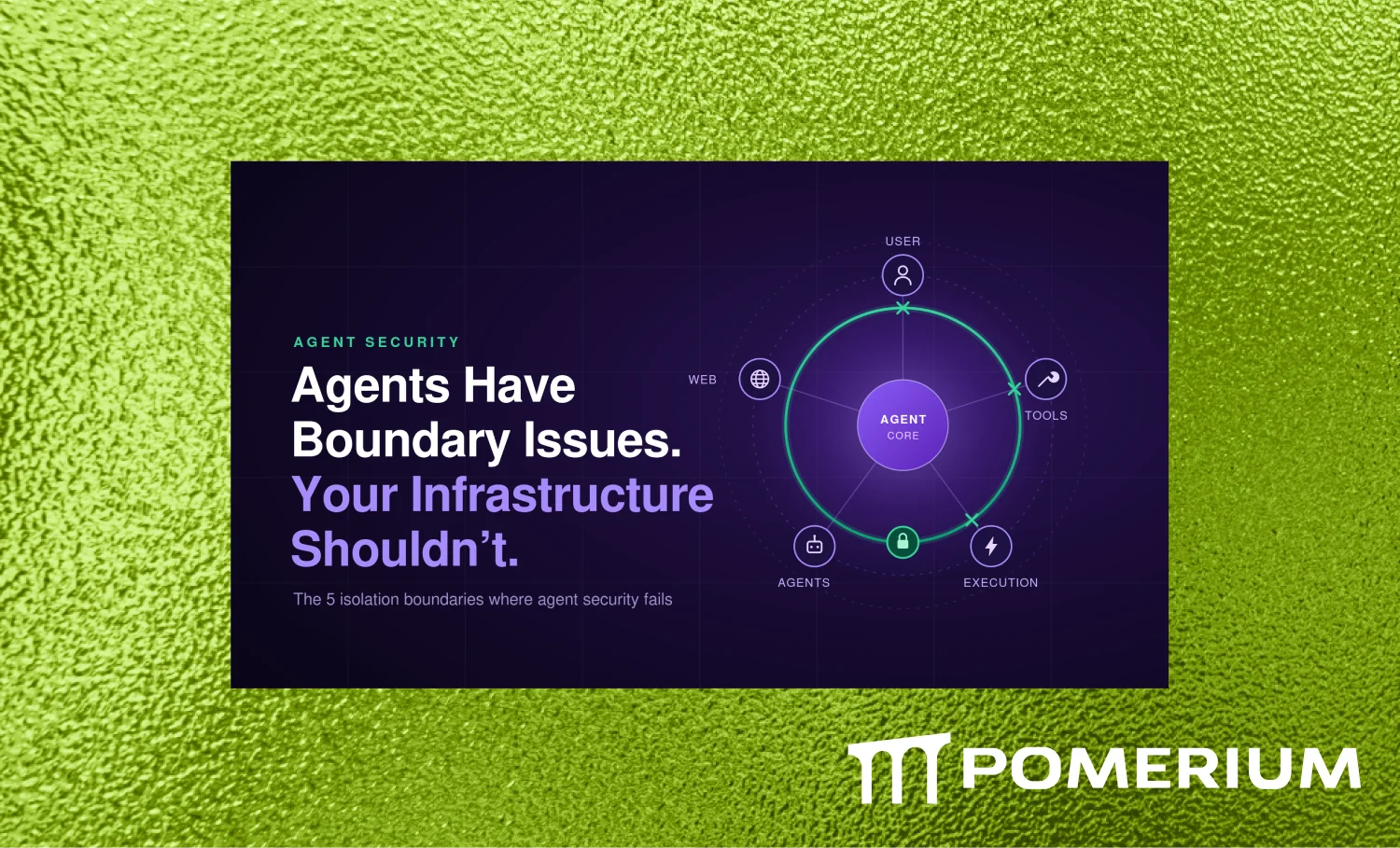
Agents Have Boundary Issues. Your Infrastructure Shouldn't.
Why the five isolation boundaries in agent security research all point to the same conclusion: enforcement has to live outside the model.
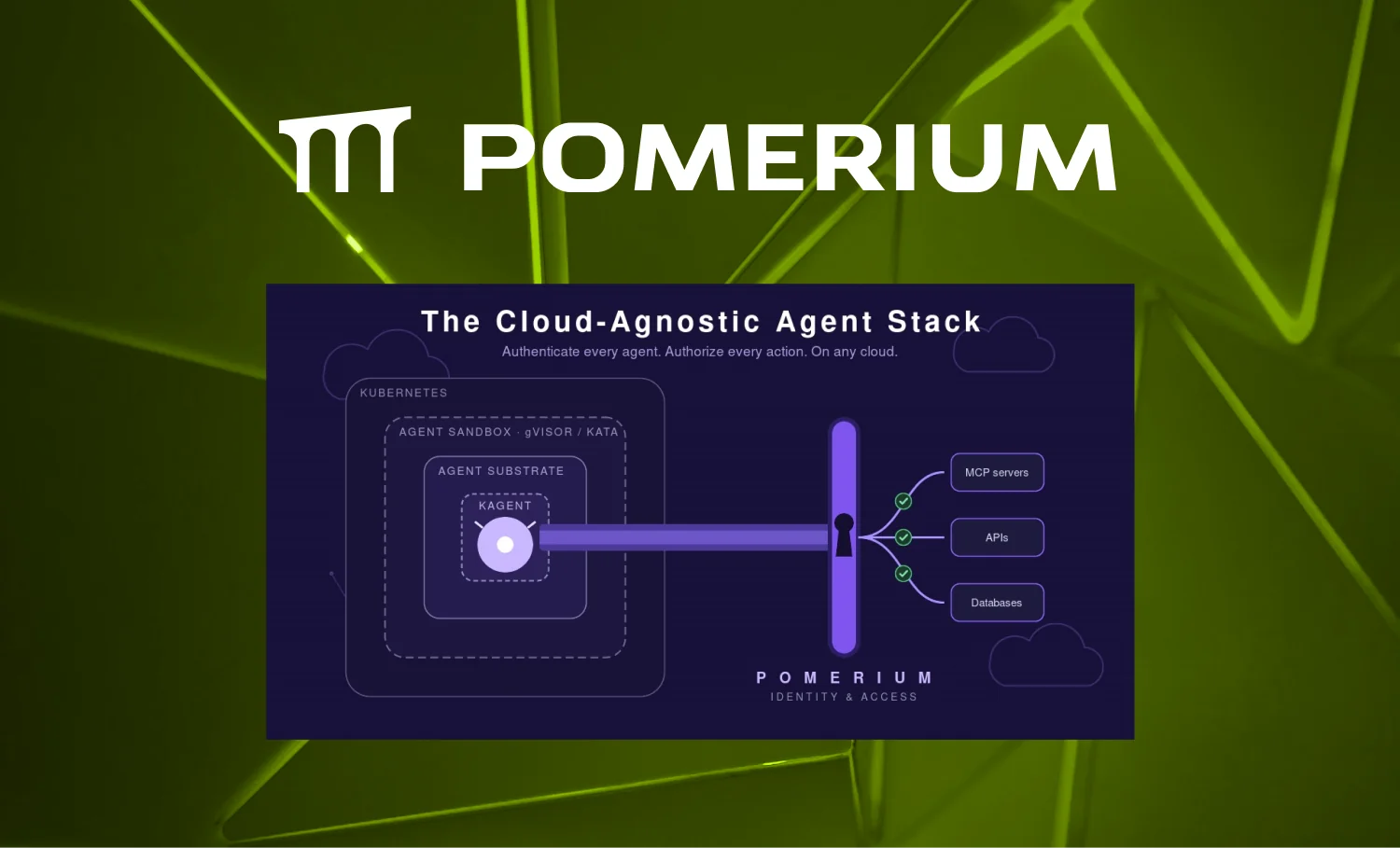
Google Built an Agent Runtime on Kubernetes. Here's How to Build a Cloud-Agnostic One with Identity Included
Google spent the last year quietly admitting what we already knew: Kubernetes was never designed to run AI agents. As Janakiram MSV writes in The New Stack , Google's GKE Agent Sandbox and the new Agent Substrate project amount to an indirect admission "that the platform that won the container decade is not the right control plane for AI agents."
.png.BOyLwQ5r.webp)
When the Web Becomes the Attacker: AI Agent Traps and the Case for Identity-Aware Access
As autonomous AI agents fan out across the open web to read pages, call tools, and drive workflows on our behalf, the web itself becomes the attack surface. The adversary no longer needs to compromise the model, the endpoint, or the user. They only need to shape the information the agent sees. The DeepMind team calls this new class of adversarial content AI Agent Traps , and their paper is the first systematic taxonomy of them.
.png.D1dxPUm2.webp)
Top 5 Agentic Gateways for Securing MCP Tool Calls in 2026
The explosive growth of agentic AI has created a new security frontier. As large language models (LLMs) gain the ability to call external tools—through the Model Context Protocol (MCP)—organizations face an urgent question: How do you control what tools an agent can access, what parameters it can pass, and how do you audit its actions?
.png.DqqhEqND.webp)
Why Identity-Aware Access is the Missing Layer in Agentic Security
A new VentureBeat analysis from this week lands on a truth that every enterprise security team already feels in their gut: most AI agents are a credential exfiltration waiting to happen. The monolithic agent pattern — where reasoning, execution, credential storage, and tool access all share the same process — creates a threat surface that conventional security tooling wasn't designed to close.
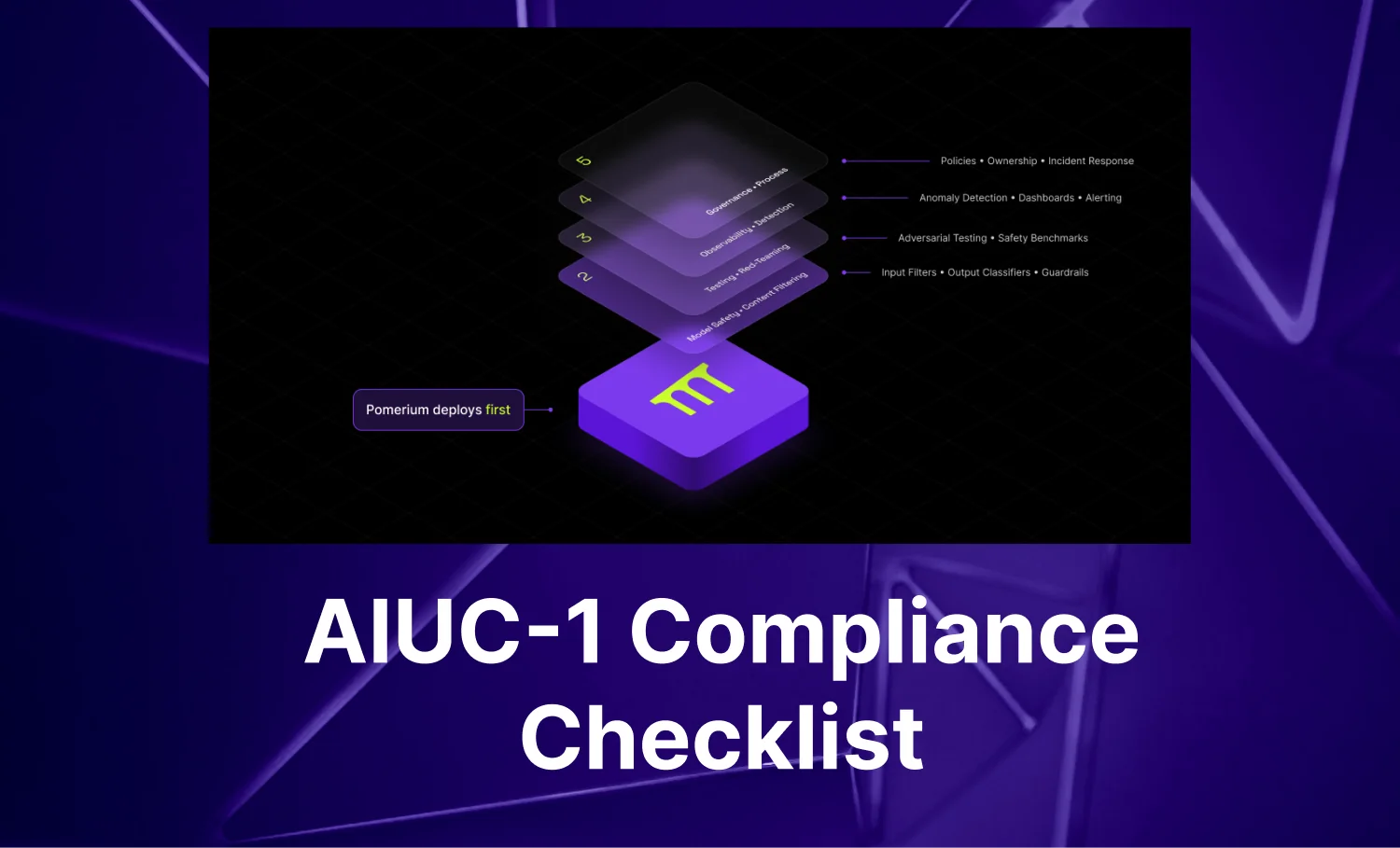
The AIUC-1 Compliance Checklist: 5 Layers Every Enterprise Needs Before Deploying AI Agents
A quick-reference checklist for AIUC-1 compliance. Five layers, 28 controls, one page. Print it, pin it, pass the audit.
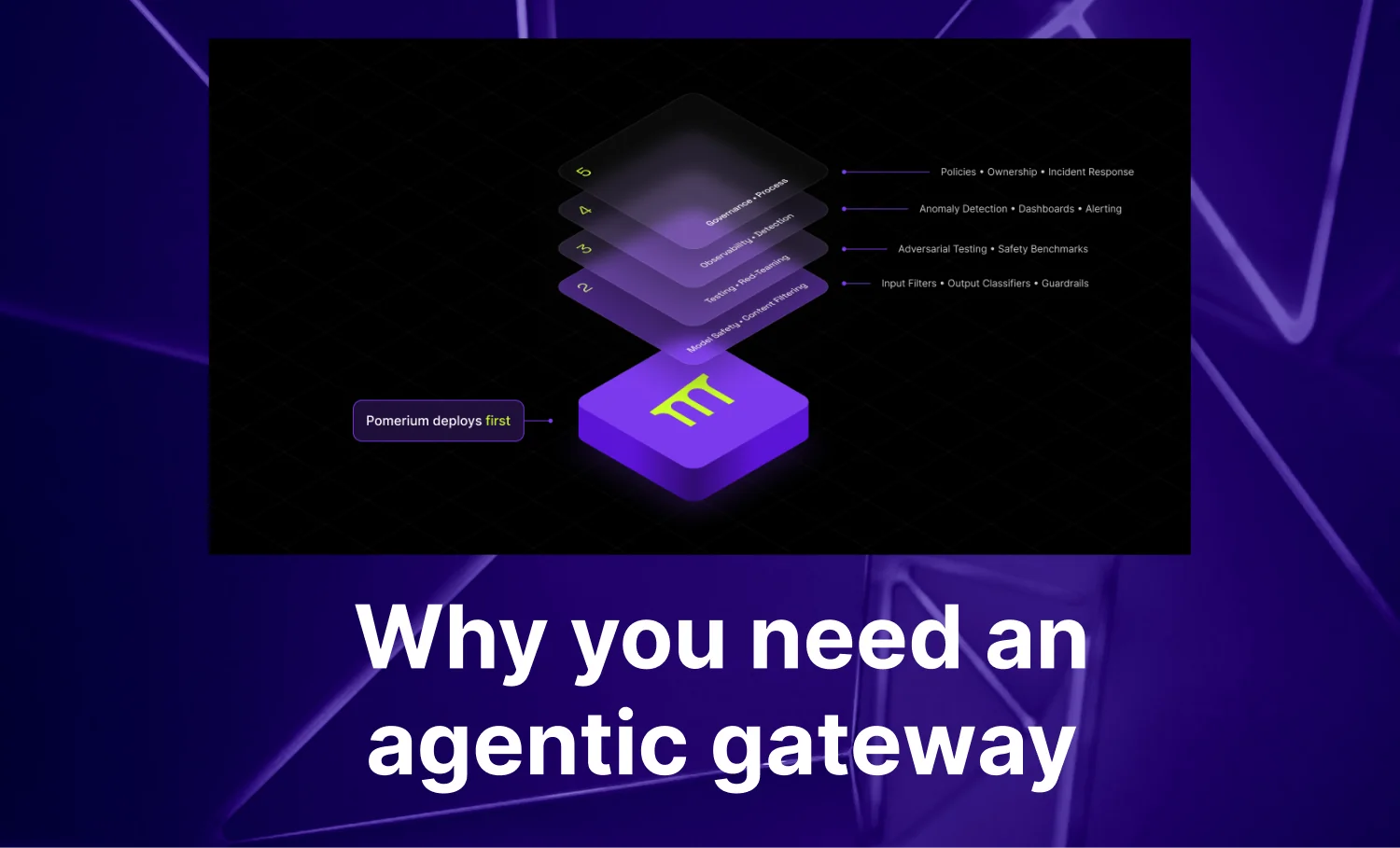
What Is an Agentic Gateway? Definition, Architecture, and Why It's Different from an API Gateway
Discover what agentic gateways are, how they secure autonomous AI agents with tool-level authorization and session-aware policy enforcement, and why API gateways fall short.
.png.CAHbD12i.webp)
The AIUC-1 Compliance Stack: The Architecture Auditors Are Actually Looking For
Most enterprises will fail AIUC-1 before the audit starts. Here’s the five-layer compliance architecture — built around a central control plane — that covers every domain.
AI Is Your Biggest Security Risk
IBM’s Cost of a Data Breach Report 2025 delivers a surprising headline: for the first time in five years, the global average cost of a data breach has declined, dropping to $4.44M . The reason? Faster detection and containment, driven largely by security automation and AI.
Why Traditional Access Controls Fail in LLM Deployments
TL;DR: Prompt-driven apps quickly outgrow static API keys and coarse Identity Access Management (IAM) roles. OWASP’s LLM risk list shows why that model breaks. The answer is continuous, identity-aware policy applied before prompts ever reach the model. Pomerium provides that control so teams can ship GenAI features with confidence.
Why the Managed Context Protocol (MCP) Spec Still Leaves Gaping Security Holes
TL;DR — MCP gives AI agents a shared way to invoke tools and complete tasks. But the spec lacks core security features. There is no built-in authorization, no identity enforcement, and no way to apply context-aware policy. Teams relying on reference servers are exposing internal APIs without guardrails. Pomerium applies Zero Trust controls to every request, adding identity, context, and policy enforcement at Layer 7.
How Shadow AI Impacts SOC 2 and HIPAA, and What to Do About It
Shadow AI bypasses critical access and audit controls required by SOC 2 and HIPAA. Learn how per-route policy with Pomerium restores visibility, enforcement, and audit readiness.