Table of contents
Large Language Models (LLMs) are no longer a novelty. Today, companies are juggling OpenAI, Anthropic, Mistral, Google, Groq, Cohere, and Perplexity, and every week there’s a new model, better price point, or faster inference path. As such, the challenge is now how to manage all of the LLMs.
This guide breaks down what an LLM gateway is, points out key features to look for when choosing an LLM gateway, and compares popular solutions like LiteLLM, OpenRouter, Kong AI Gateway, and more. Understanding your gateway options is essential when you're building an AI-powered internal tool or a high-scale inference platform.
What Is a Unified LLM Gateway?
A unified LLM gateway offers a consistent interface to interact with multiple LLM providers.
Instead of writing custom code for OpenAI, Claude, Gemini, and others, teams use a gateway to:
- Swap models with minimal effort
- Route requests intelligently
- Centralize logging and usage oversight
It's a smart routing and control layer designed to simplify development, security, and operations.
Why LLM Gateways Are Important
With different APIs, authentication formats, rate limits, pricing, and capabilities, LLM services vary widely.
If you're calling models programmatically (especially in agent-based systems or high-frequency applications) a unified gateway helps you:
- Avoid vendor lock-in
- Failover between providers
- Monitor usage and cost
- Apply consistent policies across all models
In summary, gateways reduce operational friction while improving flexibility and control.
What to Look For in an LLM Gateway
Before selecting your LLM Gateway, consider the following core capabilities:
- Multi-provider support: Coverage for OpenAI, Claude, Gemini, Mistral, Cohere, and others
- Standardized interface: Unified API surface across models
- Routing and orchestration: Load balancing, retries, fallbacks
- Logging and observability: Request metrics, audit trails, usage reports
- Access management: Authentication, authorization, and scoped API keys
- Rate limiting and quotas: Per-user or per-service restrictions
- Deployment model: Self-hosted, SaaS, or hybrid
- Community and documentation: Active support and stability
Popular LLM Gateways in 2025
1. LiteLLM
LiteLLM is an open-source gateway that supports over 100 models. It provides a unified OpenAI-compatible API and can be deployed as a server or Python SDK.
Highlights:
- Broadest model support
- Built-in logging, retries, and cost tracking
- Compatible with LangChain and OpenAI SDKs
Considerations:
- Limited built-in auth
- SSO, audit logs, and UI are enterprise-only
- Some inconsistencies in developer experience
2. OpenRouter
OpenRouter is a managed service that abstracts away model complexity. It routes requests through a central endpoint and handles billing.
Highlights:
- Fast access to new models
- No infrastructure required
Considerations:
- Fully cloud-managed
- Limited visibility into internal routing logic
3. Pomerium
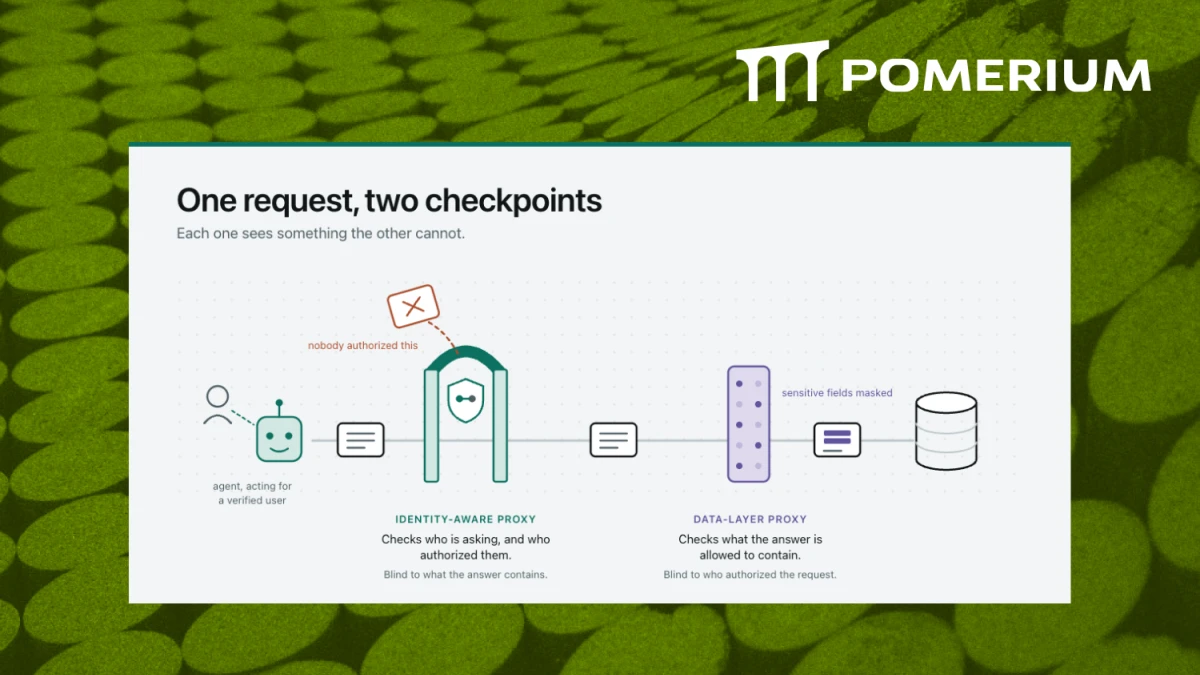
Pomerium is not a traditional LLM gateway, but it plays a vital role by securing access to LLMs through identity-aware policy enforcement. It sits in front of other gateways or services like LiteLLM to provide authentication, authorization, and fine-grained access control.
Highlights:
- Enforces access based on user identity and context
- Integrates with identity providers like Okta or Azure AD
- Logs access history with metadata
- Adds policy controls without changing core applications
Considerations:
- Designed to complement, not replace, existing LLM gateways
- Does not route or unify LLM APIs directly
4. Kong AI Gateway
Kong’s AI Gateway is built on top of Kong Gateway and integrates AI traffic management into a mature API management platform.
Highlights:
- Production-ready infrastructure
- Native support for traffic policies and rate limits
- Strong plugin ecosystem and enterprise support
Considerations:
- Requires configuration for AI-specific use cases
- Better suited for teams already using Kong
5. Portkey AI Gateway
Portkey is a drop-in proxy for LLM APIs with features like caching, observability, and rate limiting.
Highlights:
- Built-in analytics dashboard
- Easy integration with OpenAI-compatible APIs
- Includes latency and token usage tracking
Considerations:
- Still maturing feature-wise compared to older gateways
- Requires enterprise tier for advanced observability
6. TrueFoundry LLM Gateway
TrueFoundry offers a secure, scalable gateway designed for AI infrastructure teams deploying LLMs in production.
Highlights:
- Multi-LLM abstraction
- Native support for streaming and retries
- Integration with Kubernetes environments
Considerations:
- Requires infrastructure familiarity
- Tailored for MLOps teams
7. LangServe
LangServe provides a framework for wrapping LangChain applications as RESTful services. While not a gateway by default, many teams adapt it to proxy LLM calls.
Highlights:
- Flexible architecture
- Strong support for LangChain agents
Considerations:
- Requires additional work to become a full-featured gateway
- Security features must be custom-built
8. Helicone
Helicone offers a drop-in proxy for OpenAI-compatible APIs with built-in monitoring and observability.
Highlights:
- Strong logging and analytics
- Easy to deploy
Considerations:
- Narrow model support
- Less focus on access control and policy enforcement
9. Custom FastAPI or Envoy Proxies
Some teams build custom proxies using frameworks like FastAPI or Envoy. This gives complete flexibility but comes at a higher maintenance cost.
Highlights:
- Tailored to specific needs
- Can be integrated with internal tooling
Considerations:
- High development effort
- Limited out-of-the-box observability or security
Security Matters for your LLM Gateways
Many LLM gateways focus on routing and performance but leave access control as an afterthought. However, requests to LLMs often contain sensitive data or trigger downstream actions.
A secure gateway should:
- Authenticate users and agents
- Enforce fine-grained authorization policies
- Log each request with metadata
- Limit exposure of model capabilities and tokens
Conclusion
Unified LLM gateways help organizations simplify development, reduce lock-in, and manage cost and scale. Tools like LiteLLM, OpenRouter, and Kong AI Gateway each bring something different to the table, but most stop short of robust access control.
By pairing a flexible gateway with an identity-aware proxy like Pomerium, teams can safely scale their use of multiple LLMs.
Learn more about securing LLM infrastructure: